" transform="translate(5 2)" width="10px"/></svg>)

•
5 min read
How to Write Internal Status Updates That Don't Waste Time (June 2026)

•
5 min read
How to Write Internal Status Updates That Don't Waste Time (June 2026)
Status updates should keep work moving. Instead, they pile up unread or generate more questions than they answer. You spend five minutes writing an update, then fifteen minutes fielding Slack messages about details you already covered. It happens on engineering teams tracking sprint progress, in product orgs sending weekly recaps, and across any async setup where reading every message is optional. The cycle repeats because most people default to a chronological format that buries what matters. Knowing how to write internal status updates that teammates actually read and act on comes down to one thing: a structure that puts blockers and outcomes first, not a longer message.
TLDR:
Status updates fail when written chronologically instead of outcome-first, burying critical information where readers who skim will miss it.
Structure every update with four elements: what you finished, what you're working on now, what's blocking you, and what's coming next.
Match your update to your audience: direct teams need granular blockers, cross-functional partners need handoffs, and leadership needs outcomes and risks.
Speaking at 150 WPM versus typing at 40 WPM can turn a five-minute typed update into a two-minute spoken one.
AI voice dictation tools can handle structure automatically when you speak updates, learning project terms and recipient names to reduce post-draft edits.
Why Most Internal Status Updates Waste Time
Most status updates fail before anyone reads them. They're too long, structured around what the writer did instead of what the reader needs to know, and sent without any clear sense of urgency or next steps.
The core problem is a structural one. Writers default to a chronological format: here's what I worked on, here's what happened, here's what's next. That format feels logical, but it buries the most important information at the bottom. Readers skim, miss the critical detail, and follow up anyway, which defeats the whole point.

There are a few patterns that consistently slow teams down:
Writing for documentation instead of communication, treating the update like a commit log or JIRA comment instead of a message with a purpose.
Including context the reader already has, which adds length without adding value.
Leaving out a clear signal for what, if anything, the reader needs to do with the information.
Sending updates on a fixed schedule regardless of whether there's anything worth reporting, which trains people to ignore them.
The result is a cycle where more updates get sent to compensate for the ones that weren't read, and the signal-to-noise ratio drops further. The fix isn't writing more, it's writing with a clearer sense of what each update is actually for.
What Makes a Status Update Actually Useful
A useful status update does one thing well: it gives the reader exactly what they need to stay informed or take action, nothing more.
The best ones share three traits:
They lead with outcome, not activity. "Launched staging environment, ready for QA review" tells the team what changed. "Worked on deployment" tells them nothing actionable.
They flag blockers clearly. If something is stalled waiting on a decision or a dependency, that belongs in the update. Buried blockers stay unresolved longer.
They match the cadence to the context. A daily standup update should be two or three sentences. A weekly stakeholder summary can go deeper, but still needs a clear headline.
The Signal-to-Noise Problem
Most status updates fail because they favor completeness over clarity. Writers list everything they touched, which forces the reader to sort through noise to find what matters.
A good rule of thumb: if a line in your update would not change what anyone does or thinks, cut it. Status updates are not a record of effort. They are a communication tool for keeping work moving.
The Core Elements Every Status Update Needs
Every status update that actually gets read shares a few common traits. Before worrying about tone or length, you need the right structural ingredients in place.
A useful status update covers four things:
What you accomplished since the last update, stated plainly without padding or justification. Colleagues need context, not a defense of your work.
What you are working on right now, so anyone who needs to coordinate with you knows where to plug in.
What is blocking you or slowing you down, because unshared blockers tend to sit unresolved far longer than they should.
What is coming next, so your team can anticipate dependencies before they become last-minute surprises.
Why This Structure Works
These four elements map directly to how teammates actually consume status updates. They scan for relevance first, then read for detail. Leading with completed work grounds the update in fact. Flagging blockers early opens the door for help. Previewing next steps gives leadership what they need to plan ahead.
The goal is not to write more. It is to write the right things in the right order, so your update answers the questions people would have asked anyway.
How to Match Your Update to Your Audience
The right update for a Monday standup is the wrong update for a Friday executive summary. Audience shapes everything: what you include, how much detail you give, and what you leave out entirely.
Here's a simple way to think about it:
For your direct team, lead with blockers and dependencies. They need to know what's stuck so they can act, whether that is a PR waiting on review, a design decision holding up a sprint, or a dependency that crossed teams. Skip the high-level framing they already have.
For cross-functional partners, focus on shared milestones and handoffs. What do they need from you, and what can they expect this week?
For leadership, stay at the outcome level. Progress against goals, risks worth their attention, and any decisions they need to make.
A Quick Audience Reference
Audience | Focus | Level of Detail |
|---|---|---|
Direct team | Blockers, task status, next steps | Granular |
Cross-functional | Handoffs, shared dependencies | Mid-level |
Leadership | Goals, risks, decisions needed | High-level |
One practical rule: if the person reading your update has no ability to act on a detail, cut it. Status updates tend to bloat when writers include information to show work instead of moving things forward.
Writing Status Updates That People Actually Read
Good teammates don't just dump information. They give people exactly what they need to make a decision or take action, nothing more.
Here's what separates a status update that gets read from one that gets skimmed and forgotten:
Lead with the outcome, not the activity. "The API migration is complete and staging is live" tells your reader something useful. "We spent the week working on the API migration" does not.
State the current status in one sentence. Use plain language like "on track," "blocked," or "at risk" so anyone can grasp the situation in under five seconds.
Separate blockers from progress. Mixing them forces readers to untangle your update themselves, which most won't bother doing.
Be specific about next steps. Vague closers like "will continue work next week" give no one anything to act on. Name the owner and the expected date.
Keep it short enough to read in under a minute. If your update needs more than that, you're writing a report, not a status update.
The format matters too. A consistent structure means your team stops reading to figure out what kind of update they're looking at and starts reading for the actual content.
How Often to Send Status Updates
There is no single cadence that works for every team, but a few patterns hold up well in practice.
For most async or hybrid teams, a weekly update covers ongoing work without creating noise. If you are in an active sprint or a high-stakes project phase, two updates per week can prevent blockers from sitting unaddressed for too long. Daily updates, on the other hand, tend to blur together and train readers to skim or skip them entirely. Async communication works best when matched to decision cycles instead of arbitrary daily schedules.
A useful rule of thumb: match your update frequency to your decision cycle. If your team makes meaningful decisions weekly, write weekly. If decisions happen daily, a brief daily check-in may be worth the overhead.
Signs You Are Updating Too Often or Not Enough
You are writing updates with nothing new to report, which signals the cadence is too aggressive for the pace of actual work.
Stakeholders are asking for information you already sent, which usually means updates are too infrequent or buried in formats nobody reads.
Your updates consistently require follow-up questions, suggesting the interval is too long and context has gone stale between sends.
Common Status Update Mistakes and How to Avoid Them
A few patterns come up consistently, even in teams that genuinely try to communicate well.
Burying the critical detail. Opening with background before the important news means readers who skim will miss what matters most. The headline belongs first, not at the bottom.
Leaving decisions and risks unowned. Flagging a problem without naming who needs to act on it accomplishes very little. If your update surfaces a risk, assign it to someone.
Vague timelines. "Soon" and "by end of week" are not the same thing. A specific date gives readers something concrete to plan around.
Writing in passive voice throughout. "The review was completed" obscures who did it and makes follow-up harder than it needs to be. Name the person; name the action.
Turn Status Updates Into Voice Notes with Willow Voice
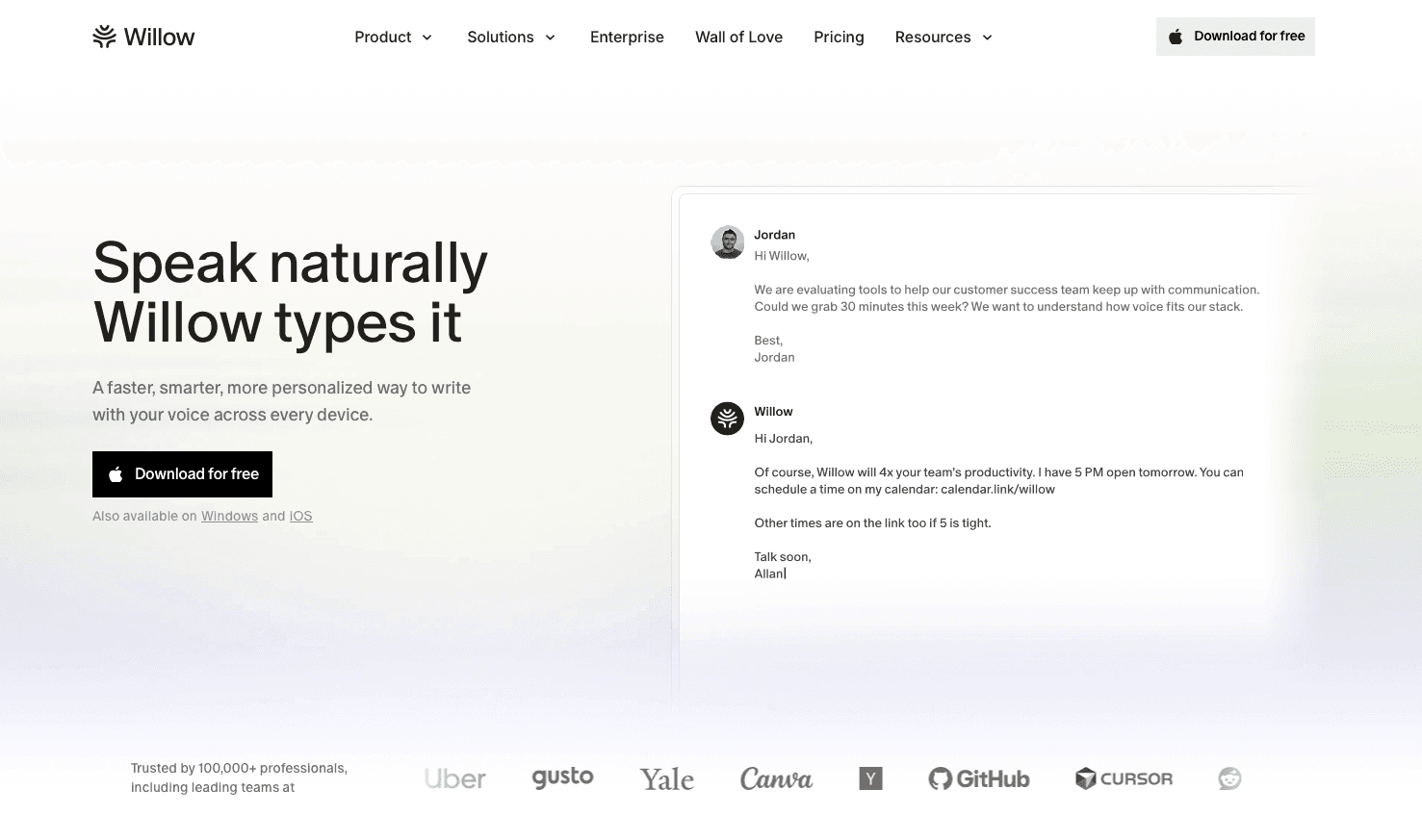
Typing is often the actual bottleneck in status reporting. Speaking at 150 WPM versus typing at 40 WPM means a five-minute typed update takes under two minutes to speak.
Willow Voice is built for this kind of recurring, high-volume communication across professional teams. Engineers wrapping up sprint work, product managers sending weekly recaps, and technical leads documenting cross-team decisions all face the same writing overhead. Speak your update and Willow's context-aware engine handles structure: bullets, paragraphs, and formatting applied automatically. It learns project-specific terms, teammate names, and technical vocabulary over time, so post-draft edits are rare. That matters when you're dictating a session recap from Cursor or Claude Code, or filing a post-sprint update into Linear or Notion, and you need the output to be clean on the first pass.
Willow runs on Mac, Windows, and iOS, so it fits the mixed-device setups most professional teams actually use. Whether you're on a Windows desktop finishing a project review or on mobile between meetings, the same hotkey workflow applies. Settings and custom vocabulary sync across devices, so switching between them does not interrupt your flow. Voice-drafted updates also tend to include fuller context than typed ones, which cuts down on follow-up questions and keeps more work moving asynchronously.
For teams in documentation-heavy environments, including healthcare and administrative contexts, the same time advantage holds: speaking a daily wrap-up takes a fraction of the time it takes to type one, and the output is clean enough to send without editing.
Willow is trusted by teams at Uber, Reddit, and across 20% of Fortune 500 companies. With ~200ms latency and SOC 2 and HIPAA compliance, it runs in enterprise environments without adding security or accuracy concerns. For anyone sending daily or weekly updates across devices and time zones, it removes the writing overhead that makes status reporting feel like a tax on your actual work.
FAQs
How long should an internal status update be?
Most status updates should take under a minute to read. If your update requires more than that, you're writing a report instead of a status update and should consider breaking it into a summary plus optional deeper detail.
Can I write status updates faster without sacrificing quality?
Yes. Speaking at 150 WPM versus typing at 40 WPM means a weekly update that takes five minutes to type takes under two minutes to speak. Voice-drafted updates can make it easier to include the context people need, especially when typed updates feel like a chore, which cuts down on follow-up questions from your team.
When should I send status updates weekly versus daily?
Match your update frequency to your decision cycle. If your team makes decisions weekly, write weekly. Daily updates work when decisions happen daily, but they tend to blur together and train readers to skim or skip them entirely if nothing new is happening.
Final Thoughts on Getting Status Updates Right
Knowing how to write internal status updates well is less about finding the perfect template and more about building a habit of writing for your reader instead of for yourself. Put the outcome first. Name the blocker. Drop everything the reader cannot act on. When that structure becomes second nature, updates get shorter, follow-up questions drop off, and the people depending on your work can actually move faster because of what you send them. That holds whether your team runs sprint reviews in Linear, coordinates across time zones in Slack, or works across Windows and Mac in a mixed-device setup. If the act of writing updates still feels like a tax on your time, Willow Voice can remove most of that friction. Speak your update in roughly the time it takes to read one, and Willow handles the structure, formatting, and project-specific terms for you.
Status updates should keep work moving. Instead, they pile up unread or generate more questions than they answer. You spend five minutes writing an update, then fifteen minutes fielding Slack messages about details you already covered. It happens on engineering teams tracking sprint progress, in product orgs sending weekly recaps, and across any async setup where reading every message is optional. The cycle repeats because most people default to a chronological format that buries what matters. Knowing how to write internal status updates that teammates actually read and act on comes down to one thing: a structure that puts blockers and outcomes first, not a longer message.
TLDR:
Status updates fail when written chronologically instead of outcome-first, burying critical information where readers who skim will miss it.
Structure every update with four elements: what you finished, what you're working on now, what's blocking you, and what's coming next.
Match your update to your audience: direct teams need granular blockers, cross-functional partners need handoffs, and leadership needs outcomes and risks.
Speaking at 150 WPM versus typing at 40 WPM can turn a five-minute typed update into a two-minute spoken one.
AI voice dictation tools can handle structure automatically when you speak updates, learning project terms and recipient names to reduce post-draft edits.
Why Most Internal Status Updates Waste Time
Most status updates fail before anyone reads them. They're too long, structured around what the writer did instead of what the reader needs to know, and sent without any clear sense of urgency or next steps.
The core problem is a structural one. Writers default to a chronological format: here's what I worked on, here's what happened, here's what's next. That format feels logical, but it buries the most important information at the bottom. Readers skim, miss the critical detail, and follow up anyway, which defeats the whole point.
There are a few patterns that consistently slow teams down:
Writing for documentation instead of communication, treating the update like a commit log or JIRA comment instead of a message with a purpose.
Including context the reader already has, which adds length without adding value.
Leaving out a clear signal for what, if anything, the reader needs to do with the information.
Sending updates on a fixed schedule regardless of whether there's anything worth reporting, which trains people to ignore them.
The result is a cycle where more updates get sent to compensate for the ones that weren't read, and the signal-to-noise ratio drops further. The fix isn't writing more, it's writing with a clearer sense of what each update is actually for.
What Makes a Status Update Actually Useful
A useful status update does one thing well: it gives the reader exactly what they need to stay informed or take action, nothing more.
The best ones share three traits:
They lead with outcome, not activity. "Launched staging environment, ready for QA review" tells the team what changed. "Worked on deployment" tells them nothing actionable.
They flag blockers clearly. If something is stalled waiting on a decision or a dependency, that belongs in the update. Buried blockers stay unresolved longer.
They match the cadence to the context. A daily standup update should be two or three sentences. A weekly stakeholder summary can go deeper, but still needs a clear headline.
The Signal-to-Noise Problem
Most status updates fail because they favor completeness over clarity. Writers list everything they touched, which forces the reader to sort through noise to find what matters.
A good rule of thumb: if a line in your update would not change what anyone does or thinks, cut it. Status updates are not a record of effort. They are a communication tool for keeping work moving.
The Core Elements Every Status Update Needs
Every status update that actually gets read shares a few common traits. Before worrying about tone or length, you need the right structural ingredients in place.
A useful status update covers four things:
What you accomplished since the last update, stated plainly without padding or justification. Colleagues need context, not a defense of your work.
What you are working on right now, so anyone who needs to coordinate with you knows where to plug in.
What is blocking you or slowing you down, because unshared blockers tend to sit unresolved far longer than they should.
What is coming next, so your team can anticipate dependencies before they become last-minute surprises.
Why This Structure Works
These four elements map directly to how teammates actually consume status updates. They scan for relevance first, then read for detail. Leading with completed work grounds the update in fact. Flagging blockers early opens the door for help. Previewing next steps gives leadership what they need to plan ahead.
The goal is not to write more. It is to write the right things in the right order, so your update answers the questions people would have asked anyway.
How to Match Your Update to Your Audience
The right update for a Monday standup is the wrong update for a Friday executive summary. Audience shapes everything: what you include, how much detail you give, and what you leave out entirely.
Here's a simple way to think about it:
For your direct team, lead with blockers and dependencies. They need to know what's stuck so they can act, whether that is a PR waiting on review, a design decision holding up a sprint, or a dependency that crossed teams. Skip the high-level framing they already have.
For cross-functional partners, focus on shared milestones and handoffs. What do they need from you, and what can they expect this week?
For leadership, stay at the outcome level. Progress against goals, risks worth their attention, and any decisions they need to make.
A Quick Audience Reference
Audience | Focus | Level of Detail |
|---|---|---|
Direct team | Blockers, task status, next steps | Granular |
Cross-functional | Handoffs, shared dependencies | Mid-level |
Leadership | Goals, risks, decisions needed | High-level |
One practical rule: if the person reading your update has no ability to act on a detail, cut it. Status updates tend to bloat when writers include information to show work instead of moving things forward.
Writing Status Updates That People Actually Read
Good teammates don't just dump information. They give people exactly what they need to make a decision or take action, nothing more.
Here's what separates a status update that gets read from one that gets skimmed and forgotten:
Lead with the outcome, not the activity. "The API migration is complete and staging is live" tells your reader something useful. "We spent the week working on the API migration" does not.
State the current status in one sentence. Use plain language like "on track," "blocked," or "at risk" so anyone can grasp the situation in under five seconds.
Separate blockers from progress. Mixing them forces readers to untangle your update themselves, which most won't bother doing.
Be specific about next steps. Vague closers like "will continue work next week" give no one anything to act on. Name the owner and the expected date.
Keep it short enough to read in under a minute. If your update needs more than that, you're writing a report, not a status update.
The format matters too. A consistent structure means your team stops reading to figure out what kind of update they're looking at and starts reading for the actual content.
How Often to Send Status Updates
There is no single cadence that works for every team, but a few patterns hold up well in practice.
For most async or hybrid teams, a weekly update covers ongoing work without creating noise. If you are in an active sprint or a high-stakes project phase, two updates per week can prevent blockers from sitting unaddressed for too long. Daily updates, on the other hand, tend to blur together and train readers to skim or skip them entirely. Async communication works best when matched to decision cycles instead of arbitrary daily schedules.
A useful rule of thumb: match your update frequency to your decision cycle. If your team makes meaningful decisions weekly, write weekly. If decisions happen daily, a brief daily check-in may be worth the overhead.
Signs You Are Updating Too Often or Not Enough
You are writing updates with nothing new to report, which signals the cadence is too aggressive for the pace of actual work.
Stakeholders are asking for information you already sent, which usually means updates are too infrequent or buried in formats nobody reads.
Your updates consistently require follow-up questions, suggesting the interval is too long and context has gone stale between sends.
Common Status Update Mistakes and How to Avoid Them
A few patterns come up consistently, even in teams that genuinely try to communicate well.
Burying the critical detail. Opening with background before the important news means readers who skim will miss what matters most. The headline belongs first, not at the bottom.
Leaving decisions and risks unowned. Flagging a problem without naming who needs to act on it accomplishes very little. If your update surfaces a risk, assign it to someone.
Vague timelines. "Soon" and "by end of week" are not the same thing. A specific date gives readers something concrete to plan around.
Writing in passive voice throughout. "The review was completed" obscures who did it and makes follow-up harder than it needs to be. Name the person; name the action.
Turn Status Updates Into Voice Notes with Willow Voice
Typing is often the actual bottleneck in status reporting. Speaking at 150 WPM versus typing at 40 WPM means a five-minute typed update takes under two minutes to speak.
Willow Voice is built for this kind of recurring, high-volume communication across professional teams. Engineers wrapping up sprint work, product managers sending weekly recaps, and technical leads documenting cross-team decisions all face the same writing overhead. Speak your update and Willow's context-aware engine handles structure: bullets, paragraphs, and formatting applied automatically. It learns project-specific terms, teammate names, and technical vocabulary over time, so post-draft edits are rare. That matters when you're dictating a session recap from Cursor or Claude Code, or filing a post-sprint update into Linear or Notion, and you need the output to be clean on the first pass.
Willow runs on Mac, Windows, and iOS, so it fits the mixed-device setups most professional teams actually use. Whether you're on a Windows desktop finishing a project review or on mobile between meetings, the same hotkey workflow applies. Settings and custom vocabulary sync across devices, so switching between them does not interrupt your flow. Voice-drafted updates also tend to include fuller context than typed ones, which cuts down on follow-up questions and keeps more work moving asynchronously.
For teams in documentation-heavy environments, including healthcare and administrative contexts, the same time advantage holds: speaking a daily wrap-up takes a fraction of the time it takes to type one, and the output is clean enough to send without editing.
Willow is trusted by teams at Uber, Reddit, and across 20% of Fortune 500 companies. With ~200ms latency and SOC 2 and HIPAA compliance, it runs in enterprise environments without adding security or accuracy concerns. For anyone sending daily or weekly updates across devices and time zones, it removes the writing overhead that makes status reporting feel like a tax on your actual work.
FAQs
How long should an internal status update be?
Most status updates should take under a minute to read. If your update requires more than that, you're writing a report instead of a status update and should consider breaking it into a summary plus optional deeper detail.
Can I write status updates faster without sacrificing quality?
Yes. Speaking at 150 WPM versus typing at 40 WPM means a weekly update that takes five minutes to type takes under two minutes to speak. Voice-drafted updates can make it easier to include the context people need, especially when typed updates feel like a chore, which cuts down on follow-up questions from your team.
When should I send status updates weekly versus daily?
Match your update frequency to your decision cycle. If your team makes decisions weekly, write weekly. Daily updates work when decisions happen daily, but they tend to blur together and train readers to skim or skip them entirely if nothing new is happening.
Final Thoughts on Getting Status Updates Right
Knowing how to write internal status updates well is less about finding the perfect template and more about building a habit of writing for your reader instead of for yourself. Put the outcome first. Name the blocker. Drop everything the reader cannot act on. When that structure becomes second nature, updates get shorter, follow-up questions drop off, and the people depending on your work can actually move faster because of what you send them. That holds whether your team runs sprint reviews in Linear, coordinates across time zones in Slack, or works across Windows and Mac in a mixed-device setup. If the act of writing updates still feels like a tax on your time, Willow Voice can remove most of that friction. Speak your update in roughly the time it takes to read one, and Willow handles the structure, formatting, and project-specific terms for you.

Try Willow for free
Instant, accurate voice dictation. No card required.
Try Willow for free
Instant, accurate voice dictation. No card required.
Other stories you’ll love
Other stories you’ll love


Your keyboard is optional now
" transform="translate(5 5)" width="9.791000051498413px"/></svg>)

The voice-first interface for modern work.
© Willow Care, Inc. 2026. All rights reserved
Your keyboard is optional now
The voice-first interface for modern work.
© Willow Care, Inc. 2026. All rights reserved
Your keyboard is optional now
The voice-first interface for modern work.
© Willow Care, Inc. 2026. All rights reserved