" transform="translate(5 2)" width="10px"/></svg>)

•
5 min read
How to Speak Technical Jargon, Medical Terms, and Code without Errors in July 2026

•
5 min read
How to Speak Technical Jargon, Medical Terms, and Code without Errors in July 2026
You’re dictating technical jargon in moments where precision actually matters, documenting patient care, writing code, or shipping specs where one wrong character changes everything. Standard dictation falls apart here, turning “hypertension” into “hypotension” or shredding function names into noise, forcing you to babysit corrections instead of doing real work. The problem isn’t how you speak or how fast you talk; it’s that most voice tools have no idea what you’re working on. Systems designed around context adjust vocabulary in real time based on the active application and workflow, so dictating technical jargon finally works at the speed and accuracy professionals need.
TLDR:
Context-aware AI cuts medical transcription errors from 7.4% to near-zero by understanding your field.
Speak at 150 WPM vs typing 40 WPM, 4x faster for documenting patient care or writing code.
Custom dictionaries remember corrections forever, eliminating repeated fixes of drug names and technical terms.
Some systems learn your writing style in 200ms, achieving zero-edit accuracy for medical and technical documentation.
Voice adapts to what’s on your screen, so the same phrase produces medical language in charts and code syntax in editors.
Why Technical Terms and Medical Jargon Break Standard Dictation
Standard dictation tools treat every word the same. When you say "hypertension" or "benign prostatic hyperplasia," the software processes these terms with the same basic algorithm it uses for everyday words. There's no understanding of medical context, no awareness that certain terms carry serious weight.
Most speech recognition systems are trained on everyday language like conversations, podcasts, and general writing. They've heard common words thousands of times. But "cephalosporin" or "anaphylaxis"? Those words barely register in the training data.
Research shows that speech recognition software generates errors at a 7.4% rate. That might sound small until you're documenting patient care or writing code where a single wrong character breaks everything. You end up spending more time fixing mistakes than you would have spent typing.
Error Type | Example Input (Spoken) | Standard Dictation Output | Impact |
|---|---|---|---|
Medical homophones | "Patient has ileum inflammation" | "Patient has ilium inflammation" | Documents hip bone instead of small intestine, wrong diagnosis |
Sound-alike medications | "Prescribe Celebrex 200mg" | "Prescribe Celexa 200mg" | Antidepressant prescribed instead of arthritis medication |
Technical acronyms | "Configure REST API endpoint" | "Configure rest a p i endpoint" | Code documentation becomes unreadable |
Drug dosage errors | "Administer 8 units insulin" | "Administer 80 units insulin" | 10x overdose, potentially fatal outcome |
Opposite conditions | "Patient presents with hypertension" | "Patient presents with hypotension" | Treatment plan tackles opposite condition (high vs. low blood pressure) |
Programming terms | "Create useState hook for counter" | "Create use state hook for counter" | Breaks code syntax, requires manual correction |
The High Cost of Medical Transcription Errors
Medical transcription errors have fatal consequences. In one case, a dictation error changed a prescribed dosage from 8 units of insulin to 80 units. The patient died, resulting in a $140 million jury award.
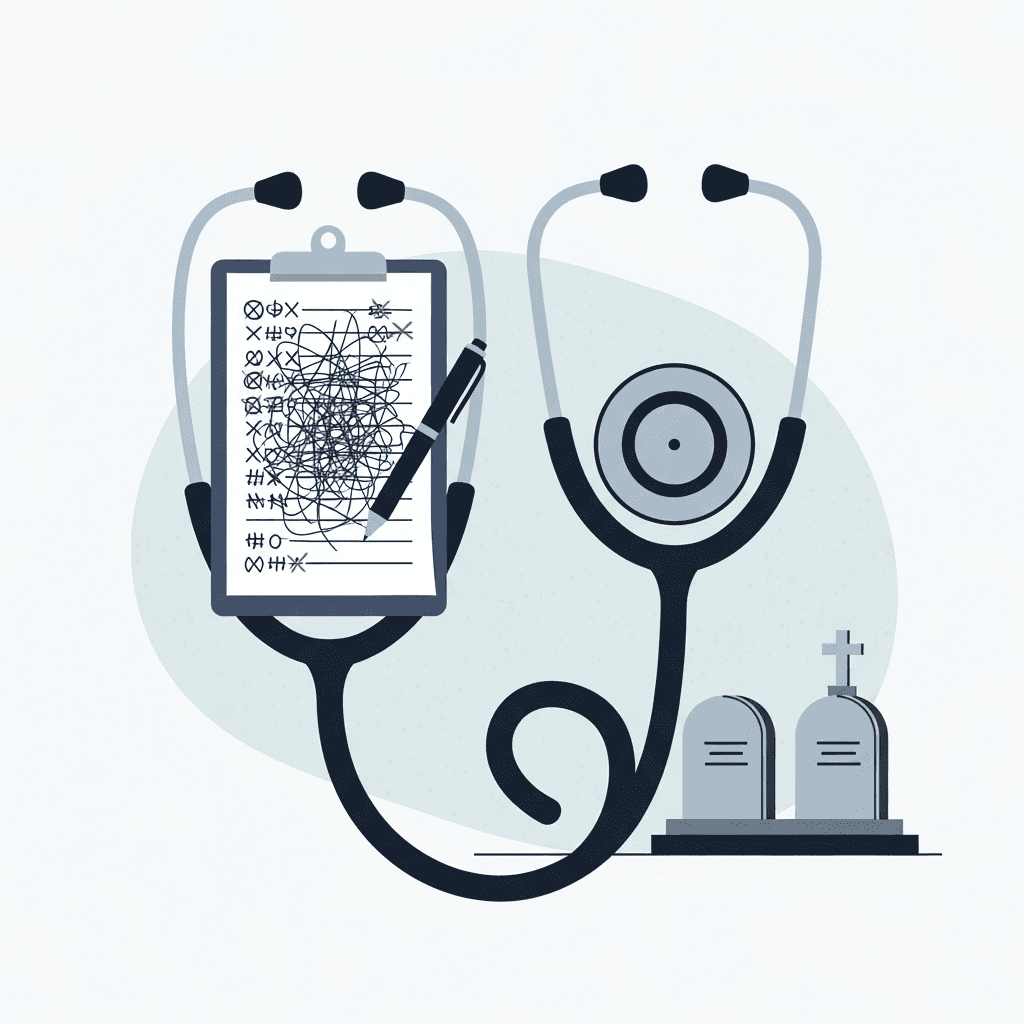
The financial impact extends beyond lawsuits. Healthcare providers spend hours weekly correcting transcription mistakes in patient charts. A misheard medication name can trigger insurance denials, delay treatment, or cause pharmacists to fill wrong prescriptions. When "hypertension" becomes "hypotension," you're documenting the opposite condition.
Patient safety requires accuracy. A wrong diagnosis code affects treatment plans. A misspelled drug name can mean the difference between healing and harm.
Common Dictation Challenges with Specialized Terminology
Homophones wreak havoc in medical dictation. Say "ileum" (small intestine) and your software might type "ilium" (hip bone). Both are anatomical terms, so spell-check won't flag the error. The same happens with "aphagia" versus "aphasia" or "perfusion" versus "profusion."
Drug names pose serious risks. "Celebrex" and "Celexa" sound identical but treat different conditions. Mix up "Xanax" and "Zantac," and you've prescribed anxiety medication instead of heartburn relief. The FDA tracks hundreds of sound-alike medication pairs that standard dictation tools routinely confuse.
Technical acronyms multiply errors across industries. Legal teams manage "ERISA" versus "RESPA." Engineers work with "REST API" and "SOAP API." Say these quickly, and most dictation software produces gibberish or wrong terms entirely.
How Context-Aware AI Solves the Technical Language Problem
Context-aware AI uses signals from your active application and workflow to understand which words make sense. When you say "React hook" while coding in Cursor, the software knows you're talking about programming, not fishing gear. It checks your active window, recent work, and field-specific patterns, similar to how AI speech to text tools separate themselves through contextual understanding.
Willow's context-aware engine analyzes your work environment in real time. Working in an EHR system? The AI focuses on medical terminology. Writing in a code editor? Programming syntax takes precedence. The software learns from corrections you make, building a personalized dictionary automatically.
The difference matters for speed. We process your speech in 200ms because the AI doesn't assess every possible word. It narrows options based on context, keeping you in flow state.
Building Your Personal Technical Dictionary
Every technical field has terms that need teaching. Company names like "Kubernetes" or "Terraform" don't exist in standard dictionaries. Client names, proprietary product codes, and team-specific abbreviations need manual entry.
Start with the words you correct most often. After a week of using dictation software, review your edits. Those repeated corrections are candidates for your custom dictionary. Add them once, spell them correctly, and the software remembers.

Organize entries by context. Create categories for client names, product terminology, technical acronyms, and medication names if you work in healthcare. Willow's shared shortcuts let teams standardize spelling across projects. Everyone benefits from consistent spelling of client names, product features, and technical specifications.
Update your dictionary quarterly in fast-moving fields. New frameworks appear in software development. Pharmaceutical companies release drugs with invented names. Legal regulations introduce fresh acronyms.
Voice Commands and Formatting for Technical Documentation
Voice commands turn speech into structured documentation without manual formatting. Say "new line" to break paragraphs, "bullet point" to start lists, or "dash" for separators across Gmail, Notion, Google Docs, and any text field. Mac users have several voice dictation software options that support these commands natively.
Technical symbols need specific commands: "open bracket" and "close bracket" for code syntax, "underscore" for variable names, "semicolon" for line endings. Speak your function name, then "open parenthesis" to list parameters. Use "new line" and "tab" to indent properly.
The advantage appears in API documentation or README files where you alternate between prose and code. Describe function behavior, then say "code block" to insert syntax examples. Willow processes commands at 200ms, maintaining flow throughout.
Reducing Errors When Dictating Code and Programming Terms
Code dictation needs different techniques than prose. Variable names like "getUserData" require spelling out as "get user data" with camelCase applied, while symbols need explicit commands: "equals sign," "curly brace," "arrow function."
The speed gap matters here. Developers typically code at 40 words per minute while speaking reaches 150 WPM. That 4x multiplier applies to writing functions, crafting prompts for Cursor or Claude, and documenting APIs.
Speak code in natural phrases instead of character-by-character. Say "function calculate total open paren items comma tax rate close paren open curly brace" as one fluid sentence.
Framework-specific terms need your custom dictionary. Add "useState," "useEffect," and other React hooks once. The same goes for library names like "TensorFlow" or language keywords. Willow's auto-dictionary remembers corrections, so "async await" always formats properly after the first fix.
Practice consistent phrasing for common patterns. Pick one way to say arrow functions or ternary operators and stick with it.
Speed without Sacrificing Accuracy in Technical Fields
Speaking speed matters less than clarity. Aim for your natural pace, around 120-140 words per minute, instead of rushing through medical terms or code syntax.
Pronounce endings clearly. "Hypertension" needs distinct syllables, not blurred together. Pause briefly between complex terms to let the AI process each word separately.
Train yourself by reading technical documentation aloud. Practice medication names, code function syntax, or legal terminology until pronunciation feels automatic. The first few times feel awkward, but consistent practice builds muscle memory for clear technical speech.
Zero Edit Dictation with Willow
Zero edit dictation only works when the software bends to how you write, speak, and think instead of asking you to slow down or clean things up after the fact. For professionals who dictate technical jargon all day, that means the system has to recognize names, terms, formatting habits, and tone without retraining every session. Willow is built for that reality. After a short period of normal use, it learns how you communicate and starts producing clean, usable text the first time, whether you’re charting patient notes, drafting specs, or replying to a long email thread.
What separates Willow from basic speech-to-text is that it behaves like a communication partner, not a transcription box. Every correction you make becomes permanent knowledge. Fix a physician’s name, a framework keyword, or a company-specific acronym once, and Willow carries that understanding everywhere you work. It adapts output based on context too, so the same spoken sentence sounds professional in Gmail, concise in Slack, and precise in a code editor. Dictating technical jargon stops feeling risky because the system understands what you’re working on and how you usually say it.
This is what makes zero edit dictation realistic at scale. Instead of spending a chunk of every day fixing errors, professionals get near-instant text at speaking speed, with formatting, tone, and terminology handled automatically. Over time, each interaction improves the next one, compounding accuracy across documents, tools, and workflows. That’s the gap Willow fills, turning dictation from a time saver into a dependable way to work when accuracy actually matters.
FAQs
What's the fastest way to build a personal technical dictionary?
Review your corrections after one week of dictation to identify terms you fix repeatedly: client names, proprietary codes, medication names, or technical acronyms. Add these entries once with correct spelling, and the software remembers forever. Update quarterly in fast-moving fields where new frameworks, drugs, or regulations introduce fresh terminology.
How do I avoid mix-ups between sound-alike medical terms?
Pronounce endings clearly at your natural pace (120-140 WPM) and pause briefly between complex terms. Practice reading technical documentation aloud to build muscle memory for terms like "ileum" versus "ilium" or drug pairs like "Celebrex" and "Celexa," and let your dictation tool's learning engine remember your corrections.
What makes zero edit dictation possible for technical professionals?
Zero edit dictation requires software that adapts to your vocabulary, sentence structure, and formatting habits over time. After correcting "Dr. Katz" or a technical term once, the AI should remember it permanently and adjust output based on where you're writing (formal language in emails, casual phrasing in messaging apps) without manual prompting.
Final Thoughts on Getting Technical Dictation Right
Getting technical dictation right comes down to whether your tool can handle when you dictate technical jargon without constant cleanup. Accurate medical terms, clean code, and correct names happen when AI remembers your corrections and understands what you’re doing in the moment, not when you slow down to fix every mistake. Willow is built around that reality, learning how you dictate technical jargon once and applying it across every document, editor, and message you write. Over time, dictation stops feeling risky and starts feeling dependable, where each correction compounds into better output and Willow keeps pace with how your work actually sounds.
You’re dictating technical jargon in moments where precision actually matters, documenting patient care, writing code, or shipping specs where one wrong character changes everything. Standard dictation falls apart here, turning “hypertension” into “hypotension” or shredding function names into noise, forcing you to babysit corrections instead of doing real work. The problem isn’t how you speak or how fast you talk; it’s that most voice tools have no idea what you’re working on. Systems designed around context adjust vocabulary in real time based on the active application and workflow, so dictating technical jargon finally works at the speed and accuracy professionals need.
TLDR:
Context-aware AI cuts medical transcription errors from 7.4% to near-zero by understanding your field.
Speak at 150 WPM vs typing 40 WPM, 4x faster for documenting patient care or writing code.
Custom dictionaries remember corrections forever, eliminating repeated fixes of drug names and technical terms.
Some systems learn your writing style in 200ms, achieving zero-edit accuracy for medical and technical documentation.
Voice adapts to what’s on your screen, so the same phrase produces medical language in charts and code syntax in editors.
Why Technical Terms and Medical Jargon Break Standard Dictation
Standard dictation tools treat every word the same. When you say "hypertension" or "benign prostatic hyperplasia," the software processes these terms with the same basic algorithm it uses for everyday words. There's no understanding of medical context, no awareness that certain terms carry serious weight.
Most speech recognition systems are trained on everyday language like conversations, podcasts, and general writing. They've heard common words thousands of times. But "cephalosporin" or "anaphylaxis"? Those words barely register in the training data.
Research shows that speech recognition software generates errors at a 7.4% rate. That might sound small until you're documenting patient care or writing code where a single wrong character breaks everything. You end up spending more time fixing mistakes than you would have spent typing.
Error Type | Example Input (Spoken) | Standard Dictation Output | Impact |
|---|---|---|---|
Medical homophones | "Patient has ileum inflammation" | "Patient has ilium inflammation" | Documents hip bone instead of small intestine, wrong diagnosis |
Sound-alike medications | "Prescribe Celebrex 200mg" | "Prescribe Celexa 200mg" | Antidepressant prescribed instead of arthritis medication |
Technical acronyms | "Configure REST API endpoint" | "Configure rest a p i endpoint" | Code documentation becomes unreadable |
Drug dosage errors | "Administer 8 units insulin" | "Administer 80 units insulin" | 10x overdose, potentially fatal outcome |
Opposite conditions | "Patient presents with hypertension" | "Patient presents with hypotension" | Treatment plan tackles opposite condition (high vs. low blood pressure) |
Programming terms | "Create useState hook for counter" | "Create use state hook for counter" | Breaks code syntax, requires manual correction |
The High Cost of Medical Transcription Errors
Medical transcription errors have fatal consequences. In one case, a dictation error changed a prescribed dosage from 8 units of insulin to 80 units. The patient died, resulting in a $140 million jury award.
The financial impact extends beyond lawsuits. Healthcare providers spend hours weekly correcting transcription mistakes in patient charts. A misheard medication name can trigger insurance denials, delay treatment, or cause pharmacists to fill wrong prescriptions. When "hypertension" becomes "hypotension," you're documenting the opposite condition.
Patient safety requires accuracy. A wrong diagnosis code affects treatment plans. A misspelled drug name can mean the difference between healing and harm.
Common Dictation Challenges with Specialized Terminology
Homophones wreak havoc in medical dictation. Say "ileum" (small intestine) and your software might type "ilium" (hip bone). Both are anatomical terms, so spell-check won't flag the error. The same happens with "aphagia" versus "aphasia" or "perfusion" versus "profusion."
Drug names pose serious risks. "Celebrex" and "Celexa" sound identical but treat different conditions. Mix up "Xanax" and "Zantac," and you've prescribed anxiety medication instead of heartburn relief. The FDA tracks hundreds of sound-alike medication pairs that standard dictation tools routinely confuse.
Technical acronyms multiply errors across industries. Legal teams manage "ERISA" versus "RESPA." Engineers work with "REST API" and "SOAP API." Say these quickly, and most dictation software produces gibberish or wrong terms entirely.
How Context-Aware AI Solves the Technical Language Problem
Context-aware AI uses signals from your active application and workflow to understand which words make sense. When you say "React hook" while coding in Cursor, the software knows you're talking about programming, not fishing gear. It checks your active window, recent work, and field-specific patterns, similar to how AI speech to text tools separate themselves through contextual understanding.
Willow's context-aware engine analyzes your work environment in real time. Working in an EHR system? The AI focuses on medical terminology. Writing in a code editor? Programming syntax takes precedence. The software learns from corrections you make, building a personalized dictionary automatically.
The difference matters for speed. We process your speech in 200ms because the AI doesn't assess every possible word. It narrows options based on context, keeping you in flow state.
Building Your Personal Technical Dictionary
Every technical field has terms that need teaching. Company names like "Kubernetes" or "Terraform" don't exist in standard dictionaries. Client names, proprietary product codes, and team-specific abbreviations need manual entry.
Start with the words you correct most often. After a week of using dictation software, review your edits. Those repeated corrections are candidates for your custom dictionary. Add them once, spell them correctly, and the software remembers.
Organize entries by context. Create categories for client names, product terminology, technical acronyms, and medication names if you work in healthcare. Willow's shared shortcuts let teams standardize spelling across projects. Everyone benefits from consistent spelling of client names, product features, and technical specifications.
Update your dictionary quarterly in fast-moving fields. New frameworks appear in software development. Pharmaceutical companies release drugs with invented names. Legal regulations introduce fresh acronyms.
Voice Commands and Formatting for Technical Documentation
Voice commands turn speech into structured documentation without manual formatting. Say "new line" to break paragraphs, "bullet point" to start lists, or "dash" for separators across Gmail, Notion, Google Docs, and any text field. Mac users have several voice dictation software options that support these commands natively.
Technical symbols need specific commands: "open bracket" and "close bracket" for code syntax, "underscore" for variable names, "semicolon" for line endings. Speak your function name, then "open parenthesis" to list parameters. Use "new line" and "tab" to indent properly.
The advantage appears in API documentation or README files where you alternate between prose and code. Describe function behavior, then say "code block" to insert syntax examples. Willow processes commands at 200ms, maintaining flow throughout.
Reducing Errors When Dictating Code and Programming Terms
Code dictation needs different techniques than prose. Variable names like "getUserData" require spelling out as "get user data" with camelCase applied, while symbols need explicit commands: "equals sign," "curly brace," "arrow function."
The speed gap matters here. Developers typically code at 40 words per minute while speaking reaches 150 WPM. That 4x multiplier applies to writing functions, crafting prompts for Cursor or Claude, and documenting APIs.
Speak code in natural phrases instead of character-by-character. Say "function calculate total open paren items comma tax rate close paren open curly brace" as one fluid sentence.
Framework-specific terms need your custom dictionary. Add "useState," "useEffect," and other React hooks once. The same goes for library names like "TensorFlow" or language keywords. Willow's auto-dictionary remembers corrections, so "async await" always formats properly after the first fix.
Practice consistent phrasing for common patterns. Pick one way to say arrow functions or ternary operators and stick with it.
Speed without Sacrificing Accuracy in Technical Fields
Speaking speed matters less than clarity. Aim for your natural pace, around 120-140 words per minute, instead of rushing through medical terms or code syntax.
Pronounce endings clearly. "Hypertension" needs distinct syllables, not blurred together. Pause briefly between complex terms to let the AI process each word separately.
Train yourself by reading technical documentation aloud. Practice medication names, code function syntax, or legal terminology until pronunciation feels automatic. The first few times feel awkward, but consistent practice builds muscle memory for clear technical speech.
Zero Edit Dictation with Willow
Zero edit dictation only works when the software bends to how you write, speak, and think instead of asking you to slow down or clean things up after the fact. For professionals who dictate technical jargon all day, that means the system has to recognize names, terms, formatting habits, and tone without retraining every session. Willow is built for that reality. After a short period of normal use, it learns how you communicate and starts producing clean, usable text the first time, whether you’re charting patient notes, drafting specs, or replying to a long email thread.
What separates Willow from basic speech-to-text is that it behaves like a communication partner, not a transcription box. Every correction you make becomes permanent knowledge. Fix a physician’s name, a framework keyword, or a company-specific acronym once, and Willow carries that understanding everywhere you work. It adapts output based on context too, so the same spoken sentence sounds professional in Gmail, concise in Slack, and precise in a code editor. Dictating technical jargon stops feeling risky because the system understands what you’re working on and how you usually say it.
This is what makes zero edit dictation realistic at scale. Instead of spending a chunk of every day fixing errors, professionals get near-instant text at speaking speed, with formatting, tone, and terminology handled automatically. Over time, each interaction improves the next one, compounding accuracy across documents, tools, and workflows. That’s the gap Willow fills, turning dictation from a time saver into a dependable way to work when accuracy actually matters.
FAQs
What's the fastest way to build a personal technical dictionary?
Review your corrections after one week of dictation to identify terms you fix repeatedly: client names, proprietary codes, medication names, or technical acronyms. Add these entries once with correct spelling, and the software remembers forever. Update quarterly in fast-moving fields where new frameworks, drugs, or regulations introduce fresh terminology.
How do I avoid mix-ups between sound-alike medical terms?
Pronounce endings clearly at your natural pace (120-140 WPM) and pause briefly between complex terms. Practice reading technical documentation aloud to build muscle memory for terms like "ileum" versus "ilium" or drug pairs like "Celebrex" and "Celexa," and let your dictation tool's learning engine remember your corrections.
What makes zero edit dictation possible for technical professionals?
Zero edit dictation requires software that adapts to your vocabulary, sentence structure, and formatting habits over time. After correcting "Dr. Katz" or a technical term once, the AI should remember it permanently and adjust output based on where you're writing (formal language in emails, casual phrasing in messaging apps) without manual prompting.
Final Thoughts on Getting Technical Dictation Right
Getting technical dictation right comes down to whether your tool can handle when you dictate technical jargon without constant cleanup. Accurate medical terms, clean code, and correct names happen when AI remembers your corrections and understands what you’re doing in the moment, not when you slow down to fix every mistake. Willow is built around that reality, learning how you dictate technical jargon once and applying it across every document, editor, and message you write. Over time, dictation stops feeling risky and starts feeling dependable, where each correction compounds into better output and Willow keeps pace with how your work actually sounds.

Try Willow for free
Instant, accurate voice dictation. No card required.
Try Willow for free
Instant, accurate voice dictation. No card required.
Other stories you’ll love
Other stories you’ll love


Your keyboard is optional now
" transform="translate(5 5)" width="9.791000051498413px"/></svg>)

The voice-first interface for modern work.
© Willow Care, Inc. 2026. All rights reserved
Your keyboard is optional now
The voice-first interface for modern work.
© Willow Care, Inc. 2026. All rights reserved
Your keyboard is optional now
The voice-first interface for modern work.
© Willow Care, Inc. 2026. All rights reserved