" transform="translate(5 2)" width="10px"/></svg>)

•
5 min read
How Developers Write Better AI Prompts by Voice in April 2026
•
5 min read
How Developers Write Better AI Prompts by Voice in April 2026
You already know what a good prompt should include, but typing it out turns that into a tradeoff between speed and completeness. So you cut details, skip edge cases, and end up fixing the output in later rounds. How developers write better AI prompts by voice comes from removing that tradeoff entirely. Speaking lets you capture the full thought in one pass, and with voice-first prompting tools, the context you would have left out shows up naturally from the start.
TLDR:
Voice input at 150 WPM vs. typing at 40 WPM lets you give AI tools 3x more context in prompts.
Sub-300ms latency keeps you in flow state when speaking complex technical prompts.
Speaking naturally produces complete thoughts, including constraints and edge cases that typing often compresses out.
Fewer prompt iterations since complete spoken context produces stronger first outputs from AI tools
Some voice-first systems learn your codebase vocabulary, format prompts cleanly, and deliver near-instant output with strong security.
Why Developers Are Switching to Voice for AI Prompting
AI coding tools have quietly rewritten the developer's job description. With 41% of all code now AI-generated, the keyboard time that used to go toward writing functions and loops now goes toward writing prompts. In tools like Cursor, Windsurf, Claude Code, and Copilot, your output quality lives and dies by what you feed them.
And that's where things get awkward. Typing a thorough prompt is slow. So developers compress. Instead of explaining the full context (the constraints, the edge cases, the why), they fire off something short and hope the AI fills in the gaps. It rarely does. The result is a mediocre first draft, another round of prompting, and three iterations where one good prompt would have worked.
The bottleneck isn't your ability to reason through a problem. It's the friction of turning that reasoning into a typed prompt.
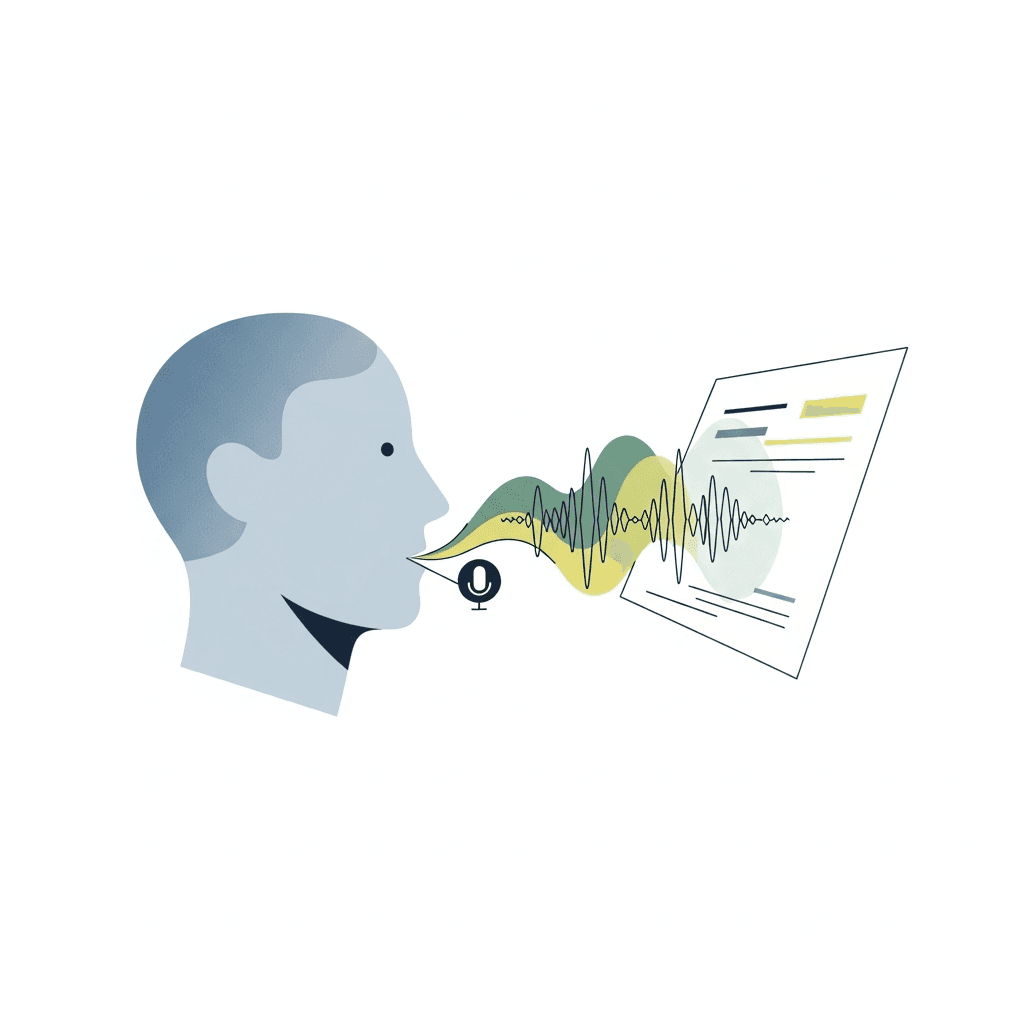
Voice changes the equation. Speaking at 150 WPM vs. typing means you can give the AI roughly 3× more context in the same amount of time. More importantly, speaking out loud naturally produces complete thoughts because you explain the why, mention the edge cases, describe what you don't want. Many developers naturally think through problems verbally. Voice just captures that thinking instead of letting it get lost in translation.
The Speed Advantage: Speaking vs. Typing for Technical Prompts
Speaking runs at 150 words per minute vs. 40 for typing. That 3x gap matters more for prompts than almost any other writing task.
Code is precise by nature. Syntax is short and structured. Prompts are natural language, and they need context, intent, tradeoffs, and specifics. When you compress them to save typing effort, your results suffer. Voice removes that compression pressure entirely.
When you speak, you stop abbreviating. You provide full context instead of abbreviating. The AI actually has something to work with.
That's where fast, accurate voice input pays off. Tools like Wispr Flow and Apple's built-in dictation help, but Willow's 200ms latency keeps you in flow state where competitors sit at 700ms or more, so your words appear before your thought disappears.
How Voice Changes Prompt Quality and Completeness
Typing puts a tax on your thoughts. Every word costs keystrokes, so your brain edits before you even start. What comes out is compressed, the shorthand version of what you actually meant.
Speaking does the opposite. When you talk through a problem, you complete the thought. You include the constraint you would have dropped. You mention that the function needs to handle null inputs, that it should match the existing naming convention, that the team reviewed two approaches last sprint and rejected the first one. None of that makes it into a typed prompt. All of it makes it into a spoken one.
That gap shows up directly in output quality. A vague prompt gives the AI room to guess, and it will guess wrong often enough to send you back for another round. A complete prompt leaves less to chance. When the context is there from the start, the first draft is usable, sometimes final.
The iteration tax is real. Each back-and-forth round costs more than time spent re-prompting. It is a context switch, a thread broken, flow interrupted. Getting it right on attempt one keeps you focused on building instead of debugging your own prompts.
Understanding Latency: Why 200ms Matters for Developer Flow State

Flow state is fragile. Developers know this. The moment you pause to wait for text to catch up, the thread you were holding starts to slip.
Latency is why most voice tools fail in practice. At 700ms or more, where Wispr Flow and Apple's built-in dictation tend to sit, there's a visible lag before text appears. That gap is long enough to interrupt your train of thought mid-prompt. For a quick Slack message, maybe fine. For a complex technical prompt where you're holding architecture context in working memory, it breaks concentration.
According to Deepgram's research on speech recognition in production, sub-300ms latency is generally considered close to real-time for transcription. Willow runs at 200ms, sitting comfortably inside that window, so your words appear before your thought finishes forming.
Voice Prompting Workflows for Cursor, Windsurf, and AI IDEs
Speaking into Cursor or Windsurf works best when you lead with context before the ask. Start with what file you're in, what the function does, and what you need changed. Then state your constraints. Then the edge cases. That order mirrors how you'd explain it to a teammate, and AI tools respond to it the same way.
A few patterns that work well with voice:
Open with your reference point: "I'm in the auth service, working on the login handler"
State your constraint before the request: "Without touching the middleware layer, I need..."
Close with what failure looks like: "...and it should not break if the refresh token is missing or expired"
Voice handles the long initial prompt. Your keyboard handles the short follow-up. That split keeps prompting fast without abandoning precision where it matters.
Common Mistakes When Speaking Technical Prompts
Voice prompting has a short learning curve, but a few habits trip developers up early on.
Speaking code syntax out loud without context confuses most transcription engines. Describe intent instead of syntax character by character. Let the AI infer syntax from intent.
Forgetting to close your thought. A spoken prompt that trails off mid-sentence leaves the AI with an incomplete request, just like a typed one does.
Mixing dictation and keyboard mid-prompt. Pick one input method per prompt. Switching breaks flow and often produces formatting inconsistencies.
Using generic dictation tools that mangle technical vocabulary. Auto-learning dictation tools make the difference for handling technical terms accurately. General-purpose dictation tools can require more correction when prompts get highly technical. Willow's auto-tagging and custom dictionary handle this automatically, getting more accurate the more you use it.
Accuracy Requirements for Developer Dictation Tools
General dictation accuracy is one thing. Developer dictation accuracy is a different problem entirely.
When a consumer tool mishears "their" as "there," you fix it in a second. When it mishears "Prisma" as "prism," "useState" as "use state," or "Windsurf" as "wind surf," your prompt breaks in ways that cost real debugging time. Technical vocabulary is dense, context-specific, and constantly evolving with your project.
The correction cycle is the hidden cost. Every misrecognized term sends you back to the keyboard, and that round trip erases most of the speed advantage voice gave you in the first place. Accuracy below a certain threshold does not slow you down gradually. It makes voice input not worth using at all.
Willow handles this through a custom dictionary that learns your codebase vocabulary automatically. The more you use it, the more it recognizes your specific variable names, library references, and framework terms. Wispr Flow and Apple's built-in dictation lack this depth, which is why they tend to break down exactly where developer prompts get specific.
How Willow Solves Voice Prompting for Developers
Willow was built for this workflow. Every design decision maps back to what breaks down when developers try to voice-prompt with tools like Wispr Flow or Apple's built-in voice dictation.
Three areas where it makes a real difference:
Tool | Latency | Technical Vocabulary | Codebase Learning | Enterprise Security |
|---|---|---|---|---|
Willow Voice | 200ms - stays inside flow state | Custom dictionary learns project-specific terms automatically | Can auto-tag open files, function names, and class names (depending on integration) | SOC 2 certified and HIPAA compliant |
Wispr Flow | 700ms+ - visible lag mid-prompt | Developer-friendly dictation, but not as deeply tailored to code-specific workflows | Supports file-aware developer workflows, though capabilities vary by setup | Public security documentation is available |
Apple Built-in Dictation | 700ms+ - noticeable delay | General-purpose dictation that may require more correction on project-specific technical terms | Not built especially for codebase-aware developer workflows | Not designed as a dedicated enterprise-grade compliance solution for development workflows |
Speed: 200ms latency means text appears before your thought finishes. No visible lag, no broken focus, no losing your place in a complex prompt. Wispr Flow and Apple dictation both clock in at 700ms or more.
Personalization: The learning engine picks up your variable names, library references, and framework terms automatically. Your codebase vocabulary becomes part of the dictionary without any manual setup.
Integrations: AI IDEs get auto-tagging for codebase context that recognizes open files, function names, and class names as you speak. You reference your actual codebase in a prompt, and Willow knows what you mean.
For enterprise teams, SOC 2 and HIPAA compliance make deployment straightforward. Shared custom dictionaries keep the whole team consistent on project naming without anyone managing it manually.
One keyboard shortcut, from any IDE or terminal, with accuracy that holds up exactly where technical prompts get specific.
FAQs
Why does 200ms latency matter for developer workflows?
Sub-300ms latency keeps you in flow state because your words appear before your thought finishes forming. At 700ms or higher (where Wispr Flow and Apple's built-in voice dictation operate), there's enough lag to interrupt your train of thought mid-prompt, breaking concentration when you're holding complex context in working memory.
What makes voice dictation fail for technical prompts?
Most tools like Wispr Flow and Apple's built-in voice dictation struggle with developer vocabulary, mishearing "Prisma" as "prism" or "useState" as "use state." Each misrecognized term sends you back to the keyboard, erasing the speed advantage and breaking your flow.
How does Willow handle codebase-specific terminology?
Willow's learning engine automatically picks up your variable names, library references, and framework terms as you use it, building a personalized dictionary without manual setup. The more you speak, the more accurate it gets with your specific project vocabulary.
Can I use voice dictation in any AI coding tool?
Yes. Willow works universally across Cursor, Windsurf, Claude Code, terminals, and any text input field with a single keyboard shortcut. With supported integrations, auto-tagging can recognize open files, function names, and class names as you speak, so you can reference your codebase more directly in prompts.
Final Thoughts on Developer Voice Dictation
How developers write better AI prompts by voice comes down to capturing your full reasoning before it gets compressed into shorthand. When you speak your prompts, the constraints, edge cases, and intent come through clearly, which reduces rework and keeps you focused on building. Willow keeps pace with your thoughts, learns your project vocabulary, and produces prompts that are ready to use as you finish speaking. Try Willow and see how much stronger your first prompt becomes.
You already know what a good prompt should include, but typing it out turns that into a tradeoff between speed and completeness. So you cut details, skip edge cases, and end up fixing the output in later rounds. How developers write better AI prompts by voice comes from removing that tradeoff entirely. Speaking lets you capture the full thought in one pass, and with voice-first prompting tools, the context you would have left out shows up naturally from the start.
TLDR:
Voice input at 150 WPM vs. typing at 40 WPM lets you give AI tools 3x more context in prompts.
Sub-300ms latency keeps you in flow state when speaking complex technical prompts.
Speaking naturally produces complete thoughts, including constraints and edge cases that typing often compresses out.
Fewer prompt iterations since complete spoken context produces stronger first outputs from AI tools
Some voice-first systems learn your codebase vocabulary, format prompts cleanly, and deliver near-instant output with strong security.
Why Developers Are Switching to Voice for AI Prompting
AI coding tools have quietly rewritten the developer's job description. With 41% of all code now AI-generated, the keyboard time that used to go toward writing functions and loops now goes toward writing prompts. In tools like Cursor, Windsurf, Claude Code, and Copilot, your output quality lives and dies by what you feed them.
And that's where things get awkward. Typing a thorough prompt is slow. So developers compress. Instead of explaining the full context (the constraints, the edge cases, the why), they fire off something short and hope the AI fills in the gaps. It rarely does. The result is a mediocre first draft, another round of prompting, and three iterations where one good prompt would have worked.
The bottleneck isn't your ability to reason through a problem. It's the friction of turning that reasoning into a typed prompt.
Voice changes the equation. Speaking at 150 WPM vs. typing means you can give the AI roughly 3× more context in the same amount of time. More importantly, speaking out loud naturally produces complete thoughts because you explain the why, mention the edge cases, describe what you don't want. Many developers naturally think through problems verbally. Voice just captures that thinking instead of letting it get lost in translation.
The Speed Advantage: Speaking vs. Typing for Technical Prompts
Speaking runs at 150 words per minute vs. 40 for typing. That 3x gap matters more for prompts than almost any other writing task.
Code is precise by nature. Syntax is short and structured. Prompts are natural language, and they need context, intent, tradeoffs, and specifics. When you compress them to save typing effort, your results suffer. Voice removes that compression pressure entirely.
When you speak, you stop abbreviating. You provide full context instead of abbreviating. The AI actually has something to work with.
That's where fast, accurate voice input pays off. Tools like Wispr Flow and Apple's built-in dictation help, but Willow's 200ms latency keeps you in flow state where competitors sit at 700ms or more, so your words appear before your thought disappears.
How Voice Changes Prompt Quality and Completeness
Typing puts a tax on your thoughts. Every word costs keystrokes, so your brain edits before you even start. What comes out is compressed, the shorthand version of what you actually meant.
Speaking does the opposite. When you talk through a problem, you complete the thought. You include the constraint you would have dropped. You mention that the function needs to handle null inputs, that it should match the existing naming convention, that the team reviewed two approaches last sprint and rejected the first one. None of that makes it into a typed prompt. All of it makes it into a spoken one.
That gap shows up directly in output quality. A vague prompt gives the AI room to guess, and it will guess wrong often enough to send you back for another round. A complete prompt leaves less to chance. When the context is there from the start, the first draft is usable, sometimes final.
The iteration tax is real. Each back-and-forth round costs more than time spent re-prompting. It is a context switch, a thread broken, flow interrupted. Getting it right on attempt one keeps you focused on building instead of debugging your own prompts.
Understanding Latency: Why 200ms Matters for Developer Flow State
Flow state is fragile. Developers know this. The moment you pause to wait for text to catch up, the thread you were holding starts to slip.
Latency is why most voice tools fail in practice. At 700ms or more, where Wispr Flow and Apple's built-in dictation tend to sit, there's a visible lag before text appears. That gap is long enough to interrupt your train of thought mid-prompt. For a quick Slack message, maybe fine. For a complex technical prompt where you're holding architecture context in working memory, it breaks concentration.
According to Deepgram's research on speech recognition in production, sub-300ms latency is generally considered close to real-time for transcription. Willow runs at 200ms, sitting comfortably inside that window, so your words appear before your thought finishes forming.
Voice Prompting Workflows for Cursor, Windsurf, and AI IDEs
Speaking into Cursor or Windsurf works best when you lead with context before the ask. Start with what file you're in, what the function does, and what you need changed. Then state your constraints. Then the edge cases. That order mirrors how you'd explain it to a teammate, and AI tools respond to it the same way.
A few patterns that work well with voice:
Open with your reference point: "I'm in the auth service, working on the login handler"
State your constraint before the request: "Without touching the middleware layer, I need..."
Close with what failure looks like: "...and it should not break if the refresh token is missing or expired"
Voice handles the long initial prompt. Your keyboard handles the short follow-up. That split keeps prompting fast without abandoning precision where it matters.
Common Mistakes When Speaking Technical Prompts
Voice prompting has a short learning curve, but a few habits trip developers up early on.
Speaking code syntax out loud without context confuses most transcription engines. Describe intent instead of syntax character by character. Let the AI infer syntax from intent.
Forgetting to close your thought. A spoken prompt that trails off mid-sentence leaves the AI with an incomplete request, just like a typed one does.
Mixing dictation and keyboard mid-prompt. Pick one input method per prompt. Switching breaks flow and often produces formatting inconsistencies.
Using generic dictation tools that mangle technical vocabulary. Auto-learning dictation tools make the difference for handling technical terms accurately. General-purpose dictation tools can require more correction when prompts get highly technical. Willow's auto-tagging and custom dictionary handle this automatically, getting more accurate the more you use it.
Accuracy Requirements for Developer Dictation Tools
General dictation accuracy is one thing. Developer dictation accuracy is a different problem entirely.
When a consumer tool mishears "their" as "there," you fix it in a second. When it mishears "Prisma" as "prism," "useState" as "use state," or "Windsurf" as "wind surf," your prompt breaks in ways that cost real debugging time. Technical vocabulary is dense, context-specific, and constantly evolving with your project.
The correction cycle is the hidden cost. Every misrecognized term sends you back to the keyboard, and that round trip erases most of the speed advantage voice gave you in the first place. Accuracy below a certain threshold does not slow you down gradually. It makes voice input not worth using at all.
Willow handles this through a custom dictionary that learns your codebase vocabulary automatically. The more you use it, the more it recognizes your specific variable names, library references, and framework terms. Wispr Flow and Apple's built-in dictation lack this depth, which is why they tend to break down exactly where developer prompts get specific.
How Willow Solves Voice Prompting for Developers
Willow was built for this workflow. Every design decision maps back to what breaks down when developers try to voice-prompt with tools like Wispr Flow or Apple's built-in voice dictation.
Three areas where it makes a real difference:
Tool | Latency | Technical Vocabulary | Codebase Learning | Enterprise Security |
|---|---|---|---|---|
Willow Voice | 200ms - stays inside flow state | Custom dictionary learns project-specific terms automatically | Can auto-tag open files, function names, and class names (depending on integration) | SOC 2 certified and HIPAA compliant |
Wispr Flow | 700ms+ - visible lag mid-prompt | Developer-friendly dictation, but not as deeply tailored to code-specific workflows | Supports file-aware developer workflows, though capabilities vary by setup | Public security documentation is available |
Apple Built-in Dictation | 700ms+ - noticeable delay | General-purpose dictation that may require more correction on project-specific technical terms | Not built especially for codebase-aware developer workflows | Not designed as a dedicated enterprise-grade compliance solution for development workflows |
Speed: 200ms latency means text appears before your thought finishes. No visible lag, no broken focus, no losing your place in a complex prompt. Wispr Flow and Apple dictation both clock in at 700ms or more.
Personalization: The learning engine picks up your variable names, library references, and framework terms automatically. Your codebase vocabulary becomes part of the dictionary without any manual setup.
Integrations: AI IDEs get auto-tagging for codebase context that recognizes open files, function names, and class names as you speak. You reference your actual codebase in a prompt, and Willow knows what you mean.
For enterprise teams, SOC 2 and HIPAA compliance make deployment straightforward. Shared custom dictionaries keep the whole team consistent on project naming without anyone managing it manually.
One keyboard shortcut, from any IDE or terminal, with accuracy that holds up exactly where technical prompts get specific.
FAQs
Why does 200ms latency matter for developer workflows?
Sub-300ms latency keeps you in flow state because your words appear before your thought finishes forming. At 700ms or higher (where Wispr Flow and Apple's built-in voice dictation operate), there's enough lag to interrupt your train of thought mid-prompt, breaking concentration when you're holding complex context in working memory.
What makes voice dictation fail for technical prompts?
Most tools like Wispr Flow and Apple's built-in voice dictation struggle with developer vocabulary, mishearing "Prisma" as "prism" or "useState" as "use state." Each misrecognized term sends you back to the keyboard, erasing the speed advantage and breaking your flow.
How does Willow handle codebase-specific terminology?
Willow's learning engine automatically picks up your variable names, library references, and framework terms as you use it, building a personalized dictionary without manual setup. The more you speak, the more accurate it gets with your specific project vocabulary.
Can I use voice dictation in any AI coding tool?
Yes. Willow works universally across Cursor, Windsurf, Claude Code, terminals, and any text input field with a single keyboard shortcut. With supported integrations, auto-tagging can recognize open files, function names, and class names as you speak, so you can reference your codebase more directly in prompts.
Final Thoughts on Developer Voice Dictation
How developers write better AI prompts by voice comes down to capturing your full reasoning before it gets compressed into shorthand. When you speak your prompts, the constraints, edge cases, and intent come through clearly, which reduces rework and keeps you focused on building. Willow keeps pace with your thoughts, learns your project vocabulary, and produces prompts that are ready to use as you finish speaking. Try Willow and see how much stronger your first prompt becomes.

Try Willow for free
Instant, accurate voice dictation. No card required.
Try Willow for free
Instant, accurate voice dictation. No card required.
Other stories you’ll love
Other stories you’ll love


Your keyboard is optional now
" transform="translate(5 5)" width="9.791000051498413px"/></svg>)

The voice-first interface for modern work.
© Willow Care, Inc. 2026. All rights reserved
Your keyboard is optional now
The voice-first interface for modern work.
© Willow Care, Inc. 2026. All rights reserved
Your keyboard is optional now
The voice-first interface for modern work.
© Willow Care, Inc. 2026. All rights reserved